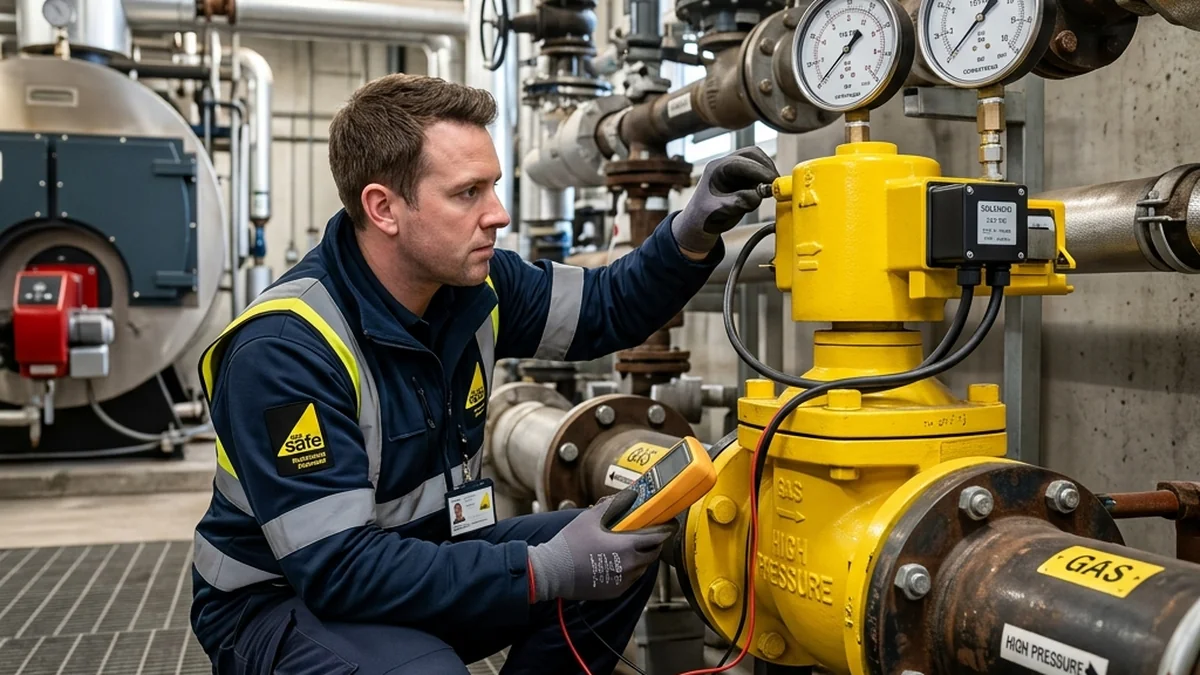
Gas is safe when appliances are installed and looked after properly. A few simple habits make a big difference, and most of them take only a few minutes.
Use a registered engineer
By law, anyone carrying out gas work must be on the Gas Safe Register. Always ask to see the engineer's Gas Safe ID card and check that they are registered for the type of work you need. You can also check an engineer on the Gas Safe Register website.
Know where to turn the gas off
Find your gas meter and the emergency control valve, which is usually next to it. When the lever is in line with the pipe, the gas is on. When it is turned at right angles to the pipe, the gas is off. Make sure everyone who uses the property knows where it is.
Fit a carbon monoxide alarm
Carbon monoxide is a poisonous gas that you cannot see, smell or taste. It can be given off by faulty boilers, gas appliances and fires. Fit an audible carbon monoxide alarm in rooms with fuel-burning appliances and test it regularly. Choose an alarm that meets the BS EN 50291 standard.
The symptoms of carbon monoxide poisoning include headaches, dizziness, nausea, tiredness and confusion.
Have appliances checked every year
Gas boilers, cookers and fires should be checked regularly by a Gas Safe registered engineer. If you are a landlord, you must have gas appliances and flues checked every 12 months and give your tenants a copy of the gas safety record.
Keep vents and flues clear
Gas appliances need a good supply of fresh air to burn safely. Never block air vents, and do not cover or stuff a flue. If you have a boiler in a cupboard, do not use the space for storage in a way that blocks ventilation.
Use appliances as intended
- Use a gas cooker only for cooking, never for heating a room
- Never use a barbecue or portable heater indoors
- If an appliance looks damaged or is not working properly, stop using it and have it checked
Know the warning signs
- Gas flames that burn yellow or orange instead of blue on a cooker or hob
- Black marks or stains on or around an appliance
- A pilot light that keeps going out
- More condensation than usual in the room
If you smell gas or suspect carbon monoxide
- Turn off the gas at the meter if it is safe to do so
- Open doors and windows
- Do not use naked flames or switch electrical items on or off
- Leave the property
- Call the National Gas Emergency Service on 0800 111 999 (free, 24 hours a day)
Get medical help straight away if anyone feels unwell.
Talk to us
If you have a question about gas work at your property, see our gas work service or contact us.